History Of Western Music
Baroque
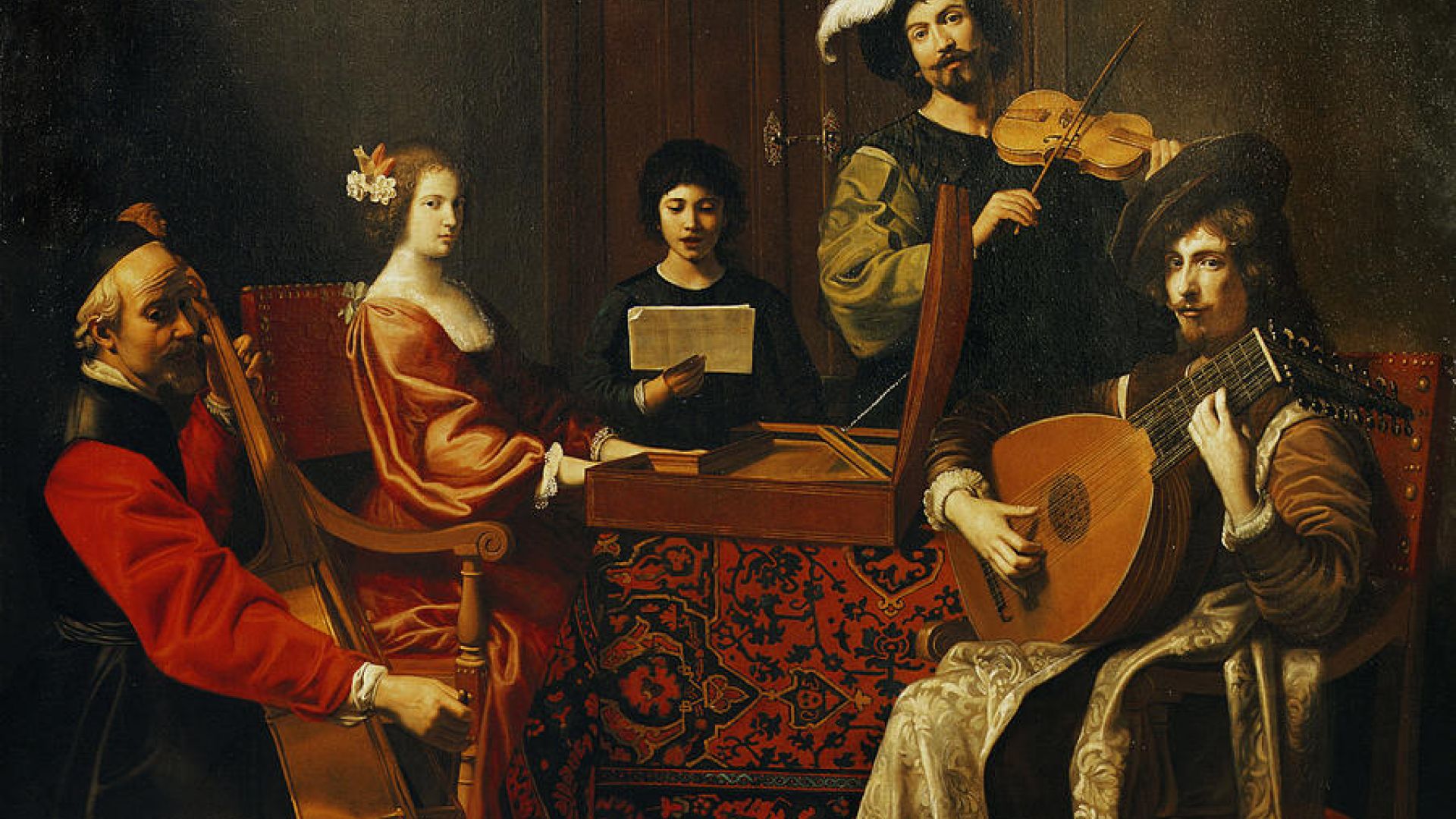
Baroque music (UK: /bəˈrɒk/ or US: /bəˈroʊk/) refers to the period or dominant style of Western classical music composed from about 1600 to 1750.[1] The Baroque style followed the Renaissance period, and was followed in turn by the Classical period after a short transition (the galant style). The Baroque period is divided into three major phases: early, middle, and late. Overlapping in time, they are conventionally dated from 1580 to 1650, from 1630 to 1700, and from 1680 to 1750. Baroque music forms a major portion of the "classical music" canon, and is widely studied, performed, and listened to. The term "baroque" comes from the Portuguese word barroco, meaning "misshapen pearl".[2] The works of George Frideric Handel, Antonio Vivaldi and Johann Sebastian Bach are considered the pinnacle of the Baroque period. Other key composers of the Baroque era include Claudio Monteverdi, Domenico Scarlatti, Alessandro Scarlatti, Alessandro Stradella, Tomaso Albinoni, Johann Pachelbel, Henry Purcell, Georg Philipp Telemann, Jean-Baptiste Lully, Jean-Philippe Rameau, Marc-Antoine Charpentier, Arcangelo Corelli, François Couperin, Johann Hermann Schein, Heinrich Schütz, Samuel Scheidt, Dieterich Buxtehude, and others.
The Baroque saw the creation of common-practice tonality, an approach to writing music in which a song or piece is written in a particular key; this type of harmony has continued to be used extensively in Western classical and popular music. During the Baroque era, professional musicians were expected to be accomplished improvisers of both solo melodic lines and accompaniment parts. Baroque concerts were typically accompanied by a basso continuo group (comprising chord-playing instrumentalists such as harpsichordists and lute players improvising chords from a figured bass part) while a group of bass instruments—viol, cello, double bass—played the bassline. A characteristic Baroque form was the dance suite. While the pieces in a dance suite were inspired by actual dance music, dance suites were designed purely for listening, not for accompanying dancers.
During the period composers experimented with finding a fuller sound for each instrumental part (thus creating the orchestra),[2] made changes in musical notation (the development of figured bass as a quick way to notate the chord progression of a song or piece), and developed new instrumental playing techniques. Baroque music expanded the size, range, and complexity of instrumental performance, and also established the mixed vocal/instrumental forms of opera, cantata and oratorio and the instrumental forms of the solo concerto and sonata as musical genres. Dense, complex polyphonic music, in which multiple independent melody lines were performed simultaneously (a popular example of this is the fugue), was an important part of many Baroque choral and instrumental works. Overall, Baroque music was a tool for expression and communication
Classical
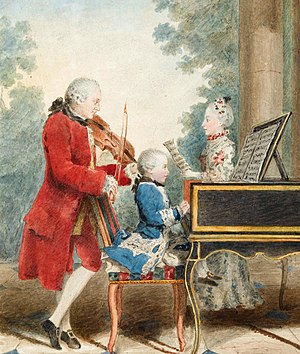 The Classical period was an era of classical music between roughly 1750 and 1820.[1]
The Classical period falls between the Baroque and the Romantic periods. Classical music has a lighter, clearer texture than Baroque music, but a more varying use of musical form, which is, in simpler terms, the rhythm and organization of any given piece of music. It is mainly homophonic, using a clear melody line over a subordinate chordal accompaniment,[2] but counterpoint was by no means forgotten, especially in liturgical vocal music and, later in the period, secular instrumental music. It also makes use of style galant which emphasized light elegance in place of the Baroque's dignified seriousness and impressive grandeur. Variety and contrast within a piece became more pronounced than before and the orchestra increased in size, range, and power.
The harpsichord was replaced as the main keyboard instrument by the piano (or fortepiano). Unlike the harpsichord, which plucks strings with quills, pianos strike the strings with leather-covered hammers when the keys are pressed, which enables the performer to play louder or softer (hence the original name "fortepiano," literally "loud soft") and play with more expression; in contrast, the force with which a performer plays the harpsichord keys does not change the sound. Instrumental music was considered important by Classical period composers. The main kinds of instrumental music were the sonata, trio, string quartet, quintet, symphony (performed by an orchestra) and the solo concerto, which featured a virtuoso solo performer playing a solo work for violin, piano, flute, or another instrument, accompanied by an orchestra. Vocal music, such as songs for a singer and piano (notably the work of Schubert), choral works, and opera (a staged dramatic work for singers and orchestra) were also important during this period.
The best-known composers from this period are Joseph Haydn, Wolfgang Amadeus Mozart, Ludwig van Beethoven, and Franz Schubert; other names in this period include: Carl Philipp Emanuel Bach, Johann Christian Bach, Luigi Boccherini, Domenico Cimarosa, Joseph Martin Kraus, Muzio Clementi, Christoph Willibald Gluck, Carl Ditters von Dittersdorf, André Grétry, Pierre-Alexandre Monsigny, Leopold Mozart, Michael Haydn, Giovanni Paisiello, Johann Baptist Wanhal, François-André Danican Philidor, Niccolò Piccinni, Antonio Salieri, Etienne Nicolas Mehul, Georg Christoph Wagenseil, Georg Matthias Monn, Johann Gottlieb Graun, Carl Heinrich Graun, Franz Benda, Georg Anton Benda, Johann Georg Albrechtsberger, Mauro Giuliani, Christian Cannabich and the Chevalier de Saint-Georges. Beethoven is regarded either as a Romantic composer or a Classical period composer who was part of the transition to the Romantic era. Schubert is also a transitional figure, as were Johann Nepomuk Hummel, Luigi Cherubini, Gaspare Spontini, Gioachino Rossini, Carl Maria von Weber, John Field, Jan Ladislav Dussek and Niccolò Paganini. The period is sometimes referred to as the era of Viennese Classicism (German: Wiener Klassik), since Gluck, Haydn, Salieri, Mozart, Beethoven, and Schubert all worked in Vienna.
The Classical period was an era of classical music between roughly 1750 and 1820.[1]
The Classical period falls between the Baroque and the Romantic periods. Classical music has a lighter, clearer texture than Baroque music, but a more varying use of musical form, which is, in simpler terms, the rhythm and organization of any given piece of music. It is mainly homophonic, using a clear melody line over a subordinate chordal accompaniment,[2] but counterpoint was by no means forgotten, especially in liturgical vocal music and, later in the period, secular instrumental music. It also makes use of style galant which emphasized light elegance in place of the Baroque's dignified seriousness and impressive grandeur. Variety and contrast within a piece became more pronounced than before and the orchestra increased in size, range, and power.
The harpsichord was replaced as the main keyboard instrument by the piano (or fortepiano). Unlike the harpsichord, which plucks strings with quills, pianos strike the strings with leather-covered hammers when the keys are pressed, which enables the performer to play louder or softer (hence the original name "fortepiano," literally "loud soft") and play with more expression; in contrast, the force with which a performer plays the harpsichord keys does not change the sound. Instrumental music was considered important by Classical period composers. The main kinds of instrumental music were the sonata, trio, string quartet, quintet, symphony (performed by an orchestra) and the solo concerto, which featured a virtuoso solo performer playing a solo work for violin, piano, flute, or another instrument, accompanied by an orchestra. Vocal music, such as songs for a singer and piano (notably the work of Schubert), choral works, and opera (a staged dramatic work for singers and orchestra) were also important during this period.
The best-known composers from this period are Joseph Haydn, Wolfgang Amadeus Mozart, Ludwig van Beethoven, and Franz Schubert; other names in this period include: Carl Philipp Emanuel Bach, Johann Christian Bach, Luigi Boccherini, Domenico Cimarosa, Joseph Martin Kraus, Muzio Clementi, Christoph Willibald Gluck, Carl Ditters von Dittersdorf, André Grétry, Pierre-Alexandre Monsigny, Leopold Mozart, Michael Haydn, Giovanni Paisiello, Johann Baptist Wanhal, François-André Danican Philidor, Niccolò Piccinni, Antonio Salieri, Etienne Nicolas Mehul, Georg Christoph Wagenseil, Georg Matthias Monn, Johann Gottlieb Graun, Carl Heinrich Graun, Franz Benda, Georg Anton Benda, Johann Georg Albrechtsberger, Mauro Giuliani, Christian Cannabich and the Chevalier de Saint-Georges. Beethoven is regarded either as a Romantic composer or a Classical period composer who was part of the transition to the Romantic era. Schubert is also a transitional figure, as were Johann Nepomuk Hummel, Luigi Cherubini, Gaspare Spontini, Gioachino Rossini, Carl Maria von Weber, John Field, Jan Ladislav Dussek and Niccolò Paganini. The period is sometimes referred to as the era of Viennese Classicism (German: Wiener Klassik), since Gluck, Haydn, Salieri, Mozart, Beethoven, and Schubert all worked in Vienna.
Romantic
Romantic music is a stylistic movement in Western Classical music associated with the period of the 19th century commonly referred to as the Romantic era (or Romantic period). It is closely related to the broader concept of Romanticism—the intellectual, artistic and literary movement that became prominent in Western culture from approximately 1798 until 1837.[1]
Romantic composers sought to create music that was individualistic, emotional, dramatic and often programmatic; reflecting broader trends within the movements of Romantic literature, poetry, art, and philosophy. Romantic music was often ostensibly inspired by (or else sought to evoke) non-musical stimuli, such as nature,[2] literature,[2] poetry,[2] super-natural elements or the fine arts. It included features such as increased chromaticism and moved away from traditional forms.[3]
The Romantic movement was an artistic, literary, and intellectual movement that originated in the second half of the 18th century in Europe and strengthened in reaction to the Industrial Revolution.[4] In part, it was a revolt against social and political norms of the Age of Enlightenment and a reaction against the scientific rationalization of nature (Casey 2008). It was embodied most strongly in the visual arts, music, literature,[5] and education,[6] and was in turn influenced by developments in natural history.[7]
One of the first significant applications of the term to music was in 1789, in the Mémoires by the Frenchman André Grétry, but it was E. T. A. Hoffmann who established the principles of musical romanticism, in a lengthy review of Ludwig van Beethoven's Fifth Symphony published in 1810, and an 1813 article on Beethoven's instrumental music. In the first of these essays Hoffmann traced the beginnings of musical Romanticism to the later works of Haydn and Mozart. It was Hoffmann's fusion of ideas already associated with the term "Romantic", used in opposition to the restraint and formality of Classical models, that elevated music, and especially instrumental music, to a position of pre-eminence in Romanticism as the art most suited to the expression of emotions. It was also through the writings of Hoffmann and other German authors that German music was brought to the center of musical Romanticism
During the Romantic period, music often took on a much more nationalistic purpose. Composers composed with a distinct sound that represented their home country and traditions. For example, Jean Sibelius' Finlandia has been interpreted to represent the rising nation of Finland, which would someday gain independence from Russian control.[18]
Frédéric Chopin was one of the first composers to incorporate nationalistic elements into his compositions. Joseph Machlis states, "Poland's struggle for freedom from tsarist rule aroused the national poet in Poland. ... Examples of musical nationalism abound in the output of the romantic era. The folk idiom is prominent in the Mazurkas of Chopin".[19] His mazurkas and polonaises are particularly notable for their use of nationalistic rhythms. Moreover, "During World War II the Nazis forbade the playing of ... Chopin's Polonaises in Warsaw because of the powerful symbolism residing in these works".[19]
Other composers, such as Bedřich Smetana, wrote pieces that musically described their homelands. In particular, Smetana's Vltava is a symphonic poem about the Moldau River in the modern-day Czech Republic, the second in a cycle of six nationalistic symphonic poems collectively titled Má vlast (My Homeland).[20] Smetana also composed eight nationalist operas, all of which remain in the repertory. They established him as the first Czech nationalist composer as well as the most important Czech opera composer of the generation who came to prominence in the 1860s.

20th-Century
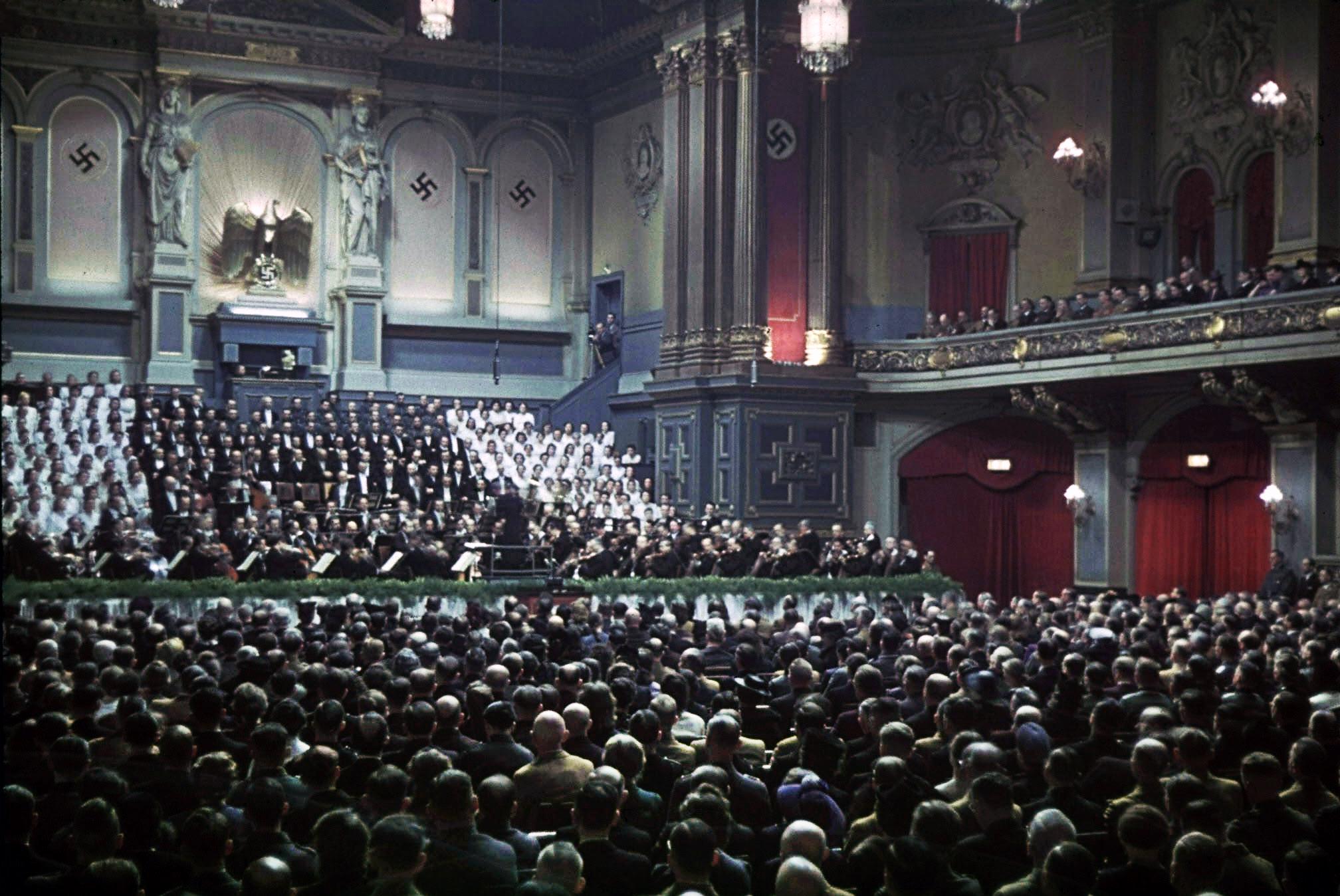 20th-century classical music is art music that was written between the years 1901 and 2000, inclusive. Musical style diverged during the 20th century as it never had previously, so this century was without a dominant style. Modernism, impressionism, and post-romanticism can all be traced to the decades before the turn of the 20th century, but can be included because they evolved beyond the musical boundaries of the 19th-century styles that were part of the earlier common practice period. Neoclassicism and expressionism came mostly after 1900. Minimalism started much later in the century and can be seen as a change from the modern to postmodern era, although some date postmodernism from as early as about 1930. Aleatory, atonality, serialism, musique concrète, electronic music, and concept music were all developed during the century. Jazz and ethnic folk music became important influences on many composers during this century.
At the turn of the century, music was characteristically late Romantic in style. Composers such as Gustav Mahler, Richard Strauss and Jean Sibelius were pushing the bounds of post-Romantic symphonic writing. At the same time, the Impressionist movement, spearheaded by Claude Debussy, was being developed in France. Debussy in fact loathed the term Impressionism: "I am trying to do 'something different—in a way realities—what the imbeciles call 'impressionism' is a term which is as poorly used as possible, particularly by art critics".[1] Maurice Ravel's music, also often labelled as impressionist, explores music in many styles not always related to it (see the discussion on Neoclassicism, below).
20th-century classical music is art music that was written between the years 1901 and 2000, inclusive. Musical style diverged during the 20th century as it never had previously, so this century was without a dominant style. Modernism, impressionism, and post-romanticism can all be traced to the decades before the turn of the 20th century, but can be included because they evolved beyond the musical boundaries of the 19th-century styles that were part of the earlier common practice period. Neoclassicism and expressionism came mostly after 1900. Minimalism started much later in the century and can be seen as a change from the modern to postmodern era, although some date postmodernism from as early as about 1930. Aleatory, atonality, serialism, musique concrète, electronic music, and concept music were all developed during the century. Jazz and ethnic folk music became important influences on many composers during this century.
At the turn of the century, music was characteristically late Romantic in style. Composers such as Gustav Mahler, Richard Strauss and Jean Sibelius were pushing the bounds of post-Romantic symphonic writing. At the same time, the Impressionist movement, spearheaded by Claude Debussy, was being developed in France. Debussy in fact loathed the term Impressionism: "I am trying to do 'something different—in a way realities—what the imbeciles call 'impressionism' is a term which is as poorly used as possible, particularly by art critics".[1] Maurice Ravel's music, also often labelled as impressionist, explores music in many styles not always related to it (see the discussion on Neoclassicism, below).